Pick and Mix Wholesale Minimum Order: Everything Buyers Need to Know
Minimum order quantities (MOQs) are the first question every new pick and mix wholesale buyer asks — and the answer varies widely depending on supplier, format, and order type. This guide explains exactly what MOQs to expect from professional pick and mix wholesale suppliers, when low MOQs make sense, and when scaling to higher volume delivers meaningfully better margins.
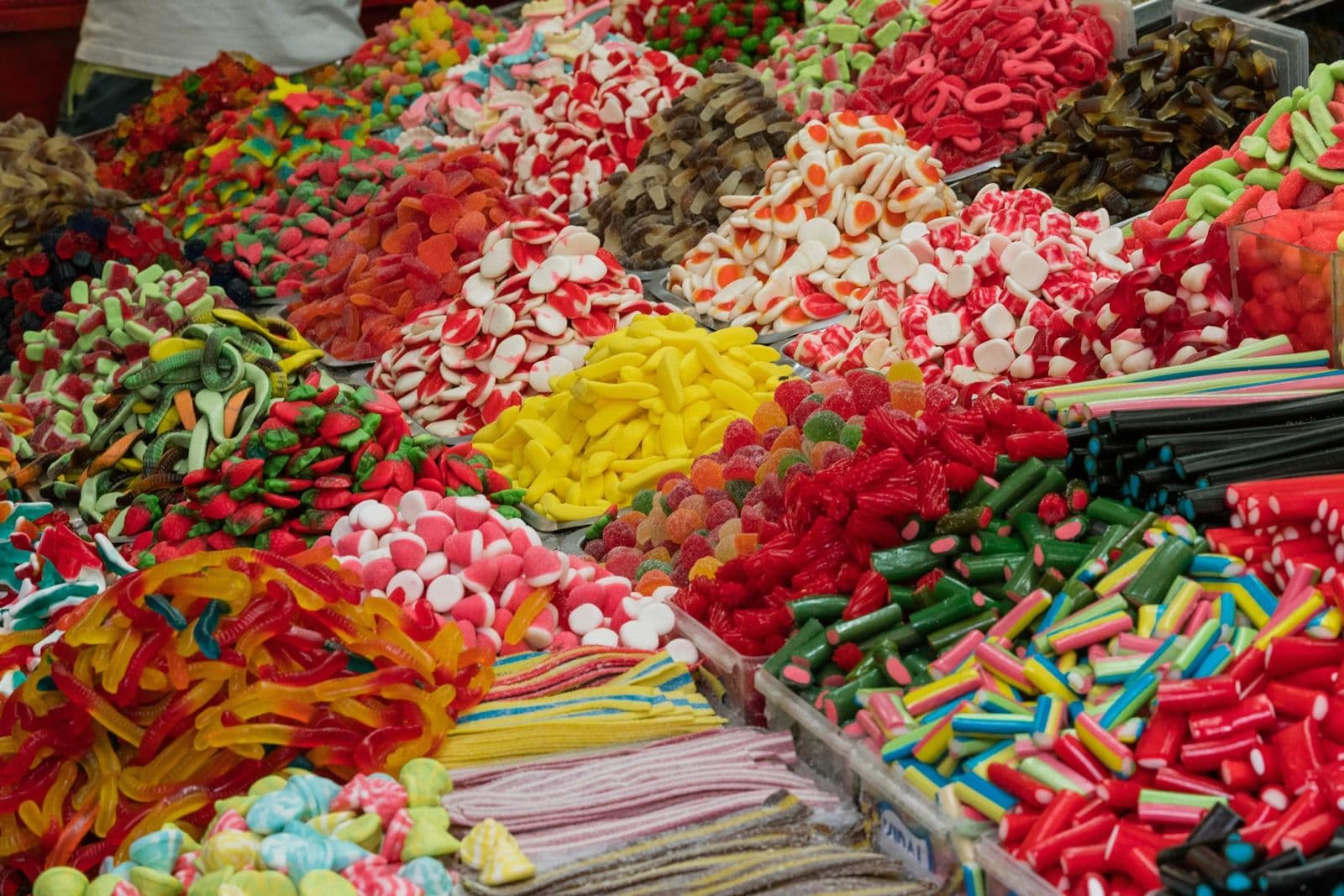
Standard Pick and Mix Wholesale MOQs Explained
MOQs in pick and mix wholesale exist for practical reasons: factory production runs, packing minimums, and shipping economics. Understanding what drives MOQs helps buyers negotiate more effectively.
Why MOQs exist:
- Factory minimum production batches: most confectionery factories won't run a format for less than 200–500 kg
- Packing efficiency: packing labour cost per kg decreases significantly above 50 kg
- Shipping economics: courier/pallet shipping has fixed costs that make very small orders uneconomical
Candora Trading's MOQ structure:
| Order type | Minimum quantity | |---|---| | Mixed format first order | 50 kg (any combination of formats) | | Single SKU | No minimum if part of 50 kg+ mixed order | | Custom assortment | 200 kg per assortment type | | Private label | 200 kg per SKU | | Container programme | 15 tonnes (mixed formats) |
What 50 kg looks like in practice:
- 50 kg of sour belts = approximately 16 × 3 kg cartons
- 50 kg mixed (5 SKUs × 10 kg each) = manageable first order for a small shop
- Retail value of 50 kg at £14/kg: £700 — achievable for a small independent retailer
Low MOQ vs. High Volume: When Does Each Make Sense?
Buying at minimum order is right when starting — but there's a clear point at which scaling volume pays for itself.
When low MOQ makes sense:
- First order: you need to trial formats before committing
- New location: untested demand — start at 50 kg, monitor sell-through, scale
- Seasonal trial: testing a new seasonal format before committing to volume
- Small independent retailer: turnover doesn't justify larger cash commitment
When to scale volume: The margin jump between 50 kg and 200 kg is typically 8–15 percentage points. On a £700 retail value order (50 kg at £14/kg), that's £56–105 additional gross profit per order. For a retailer buying monthly, that's £672–1,260 additional annual gross profit — from a single volume decision.
Volume break-even analysis:
| Buy price | Volume | Retail value | Gross margin | Gross profit | |---|---|---|---|---| | €8.50/kg (50 kg) | 50 kg | £700 | 47% | £329 | | €6.50/kg (200 kg) | 200 kg | £2,800 | 57% | £1,596 | | €5.00/kg (500 kg) | 500 kg | £7,000 | 64% | £4,480 |
The difference between 50 kg and 500 kg monthly is not just volume — it's 17 percentage points of margin that fundamentally changes the business economics.
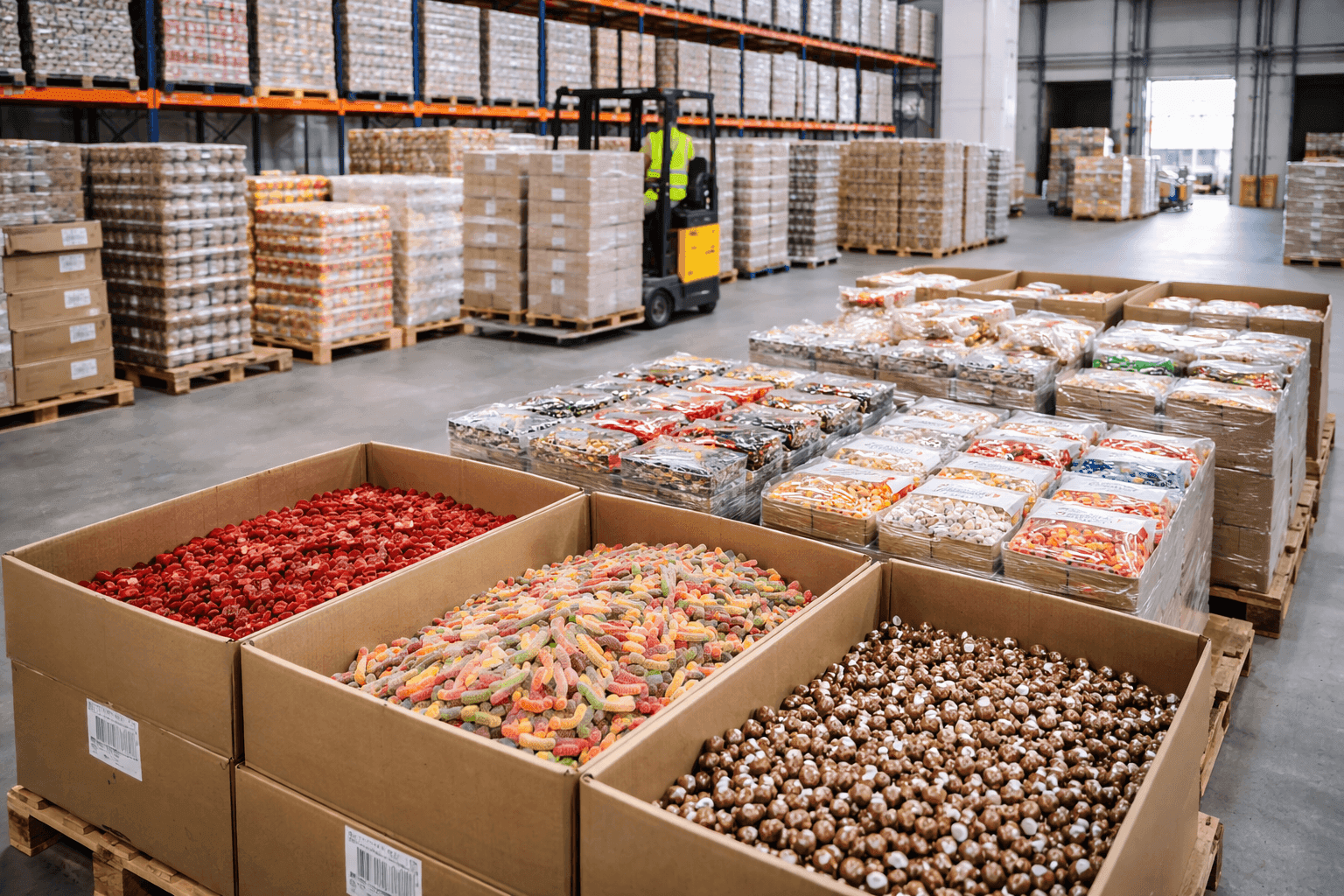
How to Start with a Low MOQ Pick and Mix Order
A well-structured first order minimises risk while building data for scale decisions.
Step 1: Choose 5–8 formats A first 50 kg order across 5–8 formats gives you velocity data on each format. Recommended starting assortment:
- Sour belts (10 kg)
- Swedish jelly bears (10 kg)
- Foam strawberries (8 kg)
- Cola bottles (8 kg)
- Sour worms (7 kg)
- Foam bananas (7 kg)
Step 2: Request samples Before placing any wholesale order, request samples (200–300g per format). Assess texture, flavour, colour, and shelf life.
Step 3: Calculate your retail requirements At 50 kg across 6 formats, you have roughly 8 kg per format. A standard 3-litre scoop bin holds approximately 2–3 kg. So 8 kg = 3–4 weeks of stock for one bin position.
Step 4: Track velocity per SKU After first order, track which formats are selling fastest. Within 4–6 weeks, you have reliable data for your second order — typically 80–120 kg with more weight on proven formats.
Step 5: Scale based on evidence After 3 orders, you know your pick and mix velocity. Scale confidently to 200–500 kg per order based on actual performance data.
FAQ
Frequently asked questions
At Candora Trading, the minimum order is 50 kg across any combination of formats. There is no per-SKU minimum on mixed orders. This allows a first-time buyer to trial 6–10 different formats with a single affordable order.
Orders under 50 kg are generally not economical due to shipping costs relative to product value. At 50 kg, shipping represents approximately 8–12% of product cost. Below 20 kg, shipping often exceeds 25% of product cost, making the economics unfavourable.
No — on mixed orders of 50 kg or more, there is no minimum per individual SKU. This means you can order 5 kg of sour belts, 8 kg of jelly bears, and so on, as long as the total order is 50 kg or more.
If you're reordering the same formats month after month, moving from 50 kg to 200 kg typically saves 15–20% on product cost and reduces shipping frequency. The break-even is usually 2–3 months of higher stock turns, after which the volume discount creates ongoing margin improvement.
Ready to get started?
Contact our team to discuss volumes, pricing, and supply structures for your market.
Related
Explore more
Pick & Mix
Swedish Pick and Mix Wholesale: How to Source and Profit
Pick & Mix
Bulk Pick and Mix: Complete Guide to Volume Sourcing
Pick & Mix
Pick and Mix Wholesale UK: Swedish Lösgodis for British Retailers
Pick & Mix
Pick & Mix Profitability Calculator: Know Your ROI Before Investing
Pick & Mix
Pick and Mix Supplier: Building a Profitable Candy Supply Partnership
Financial
Wholesale Pricing Models & Volume Discounts