Candy Wholesale Margin Guide
Understanding candy wholesale margins is essential for building a profitable confectionery retail or import business. This guide explains how bulk candy pricing is structured, what margins retailers and importers typically work with, and how to calculate whether your candy business will be profitable at different volume levels.
How Wholesale Candy Pricing Works
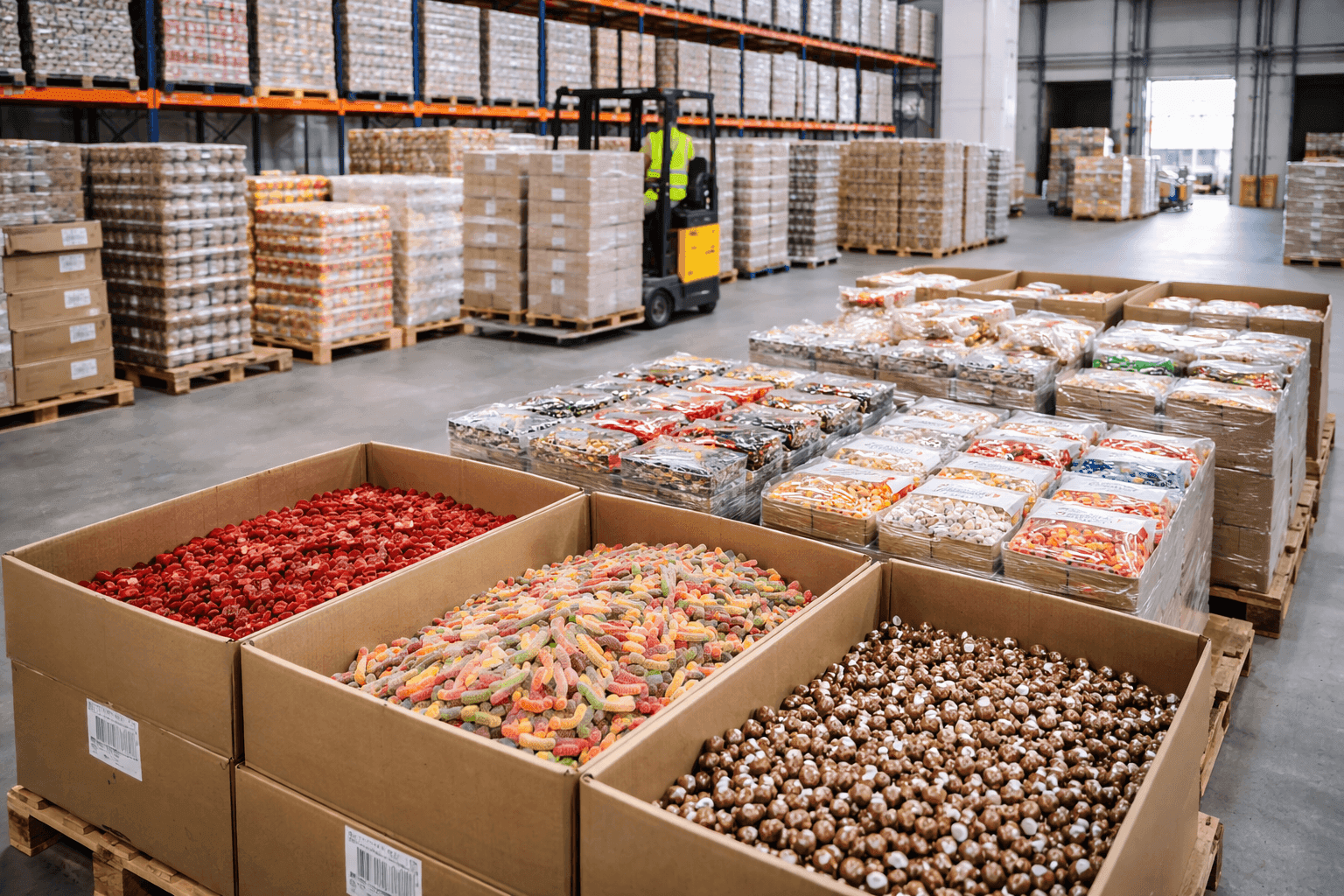
Wholesale candy is priced per kilogram (kg) for bulk assortments and per unit or per case for pre-packaged products. Ex-works pricing — the price you pay at the supplier's warehouse before freight — is the starting point. To arrive at your landed cost (the price per kg or unit in your warehouse), you add freight, customs duties, and import fees. Your retail or resale price is then set based on your target margin above landed cost.
Typical Candy Wholesale Price Ranges
European bulk candy wholesale pricing varies considerably by product type and volume. As a general guide: standard gummy candy and foam shapes range from €3–7/kg at pallet volume; premium Scandinavian pick and mix typically runs €5–10/kg; sour candy and novelty formats €4–8/kg; private label production adds a premium but improves retail margins through branding. Prices at container volume (15+ tonnes) are typically 30–40% lower than pallet pricing. See our pricing page for current volume tiers.
Retail Margins on Candy
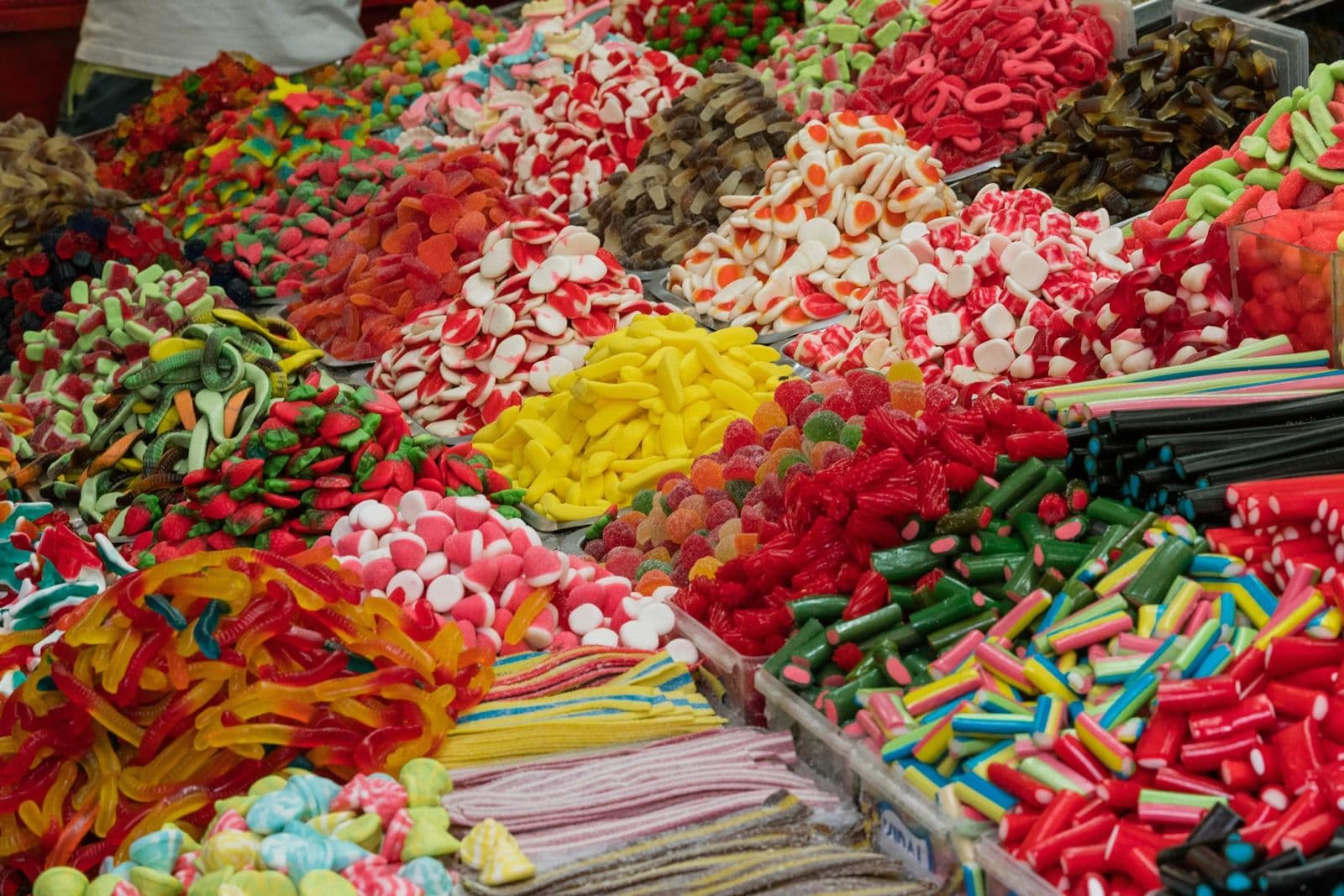
Retail candy margins vary significantly by channel and format. Convenience store candy typically operates at 30–50% gross retail margin (the difference between retail price and cost of goods). Specialty food retail and premium sweet shops achieve 50–70% margin on pick and mix and pre-packaged European candy. Online candy retail typically targets 40–60% gross margin before marketing costs. Private label candy generally achieves higher retail margins than branded product because you control the pricing — typically 60–75% for well-positioned own-label confectionery.
Pick and Mix Margin Calculation
Pick and mix margin is one of the most attractive in candy retail when operated correctly. A bulk mix bought at €4/kg wholesale, with 10% waste/spoilage allowance, and sold at €2.50 per 100g (€25/kg retail) generates approximately 80% gross margin before operating costs. At a sweet shop doing 50 kg per week, that's €21,000/year in gross profit from a single 50 kg weekly candy spend. The key variables are buy price, sell price, waste rate, and throughput — we can help you model these for your specific situation.
Import Margin Considerations
Candy importers add a further layer to the margin model: buy price ex-works, plus freight (typically €0.20–0.50/kg for European road freight at pallet volume), plus import duty (2–8% for UK, 0–5.6% for USA), plus local warehousing and distribution, before arriving at the price charged to retail customers. Import businesses typically target 20–35% gross margin on the resale price to retailers, which means the ex-works buy price needs to be low enough to support the full supply chain.
When Private Label Improves Margins
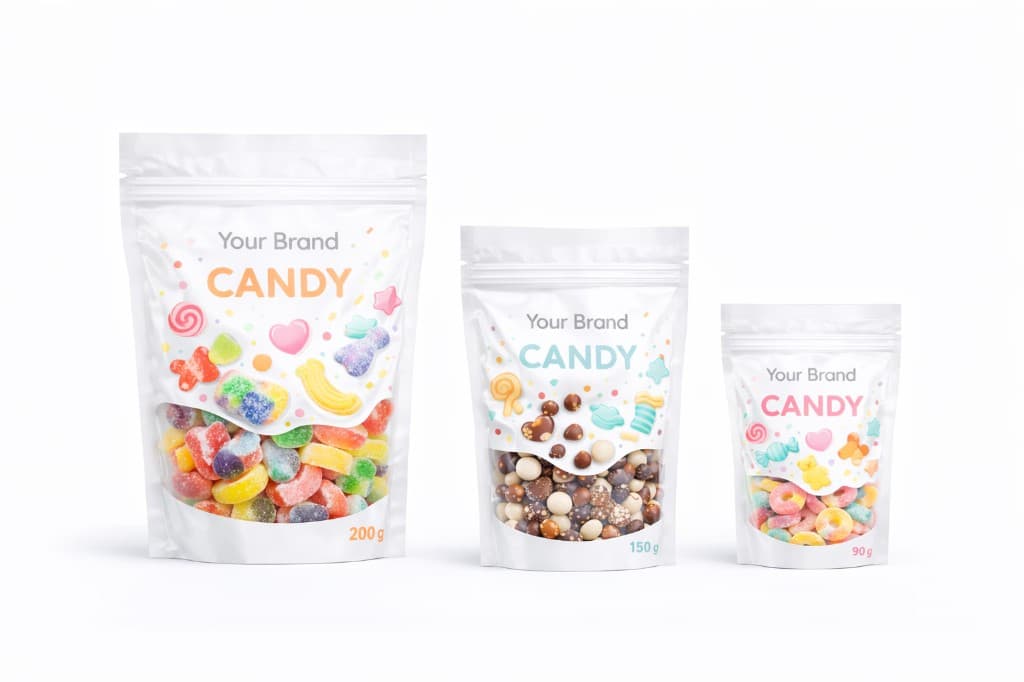
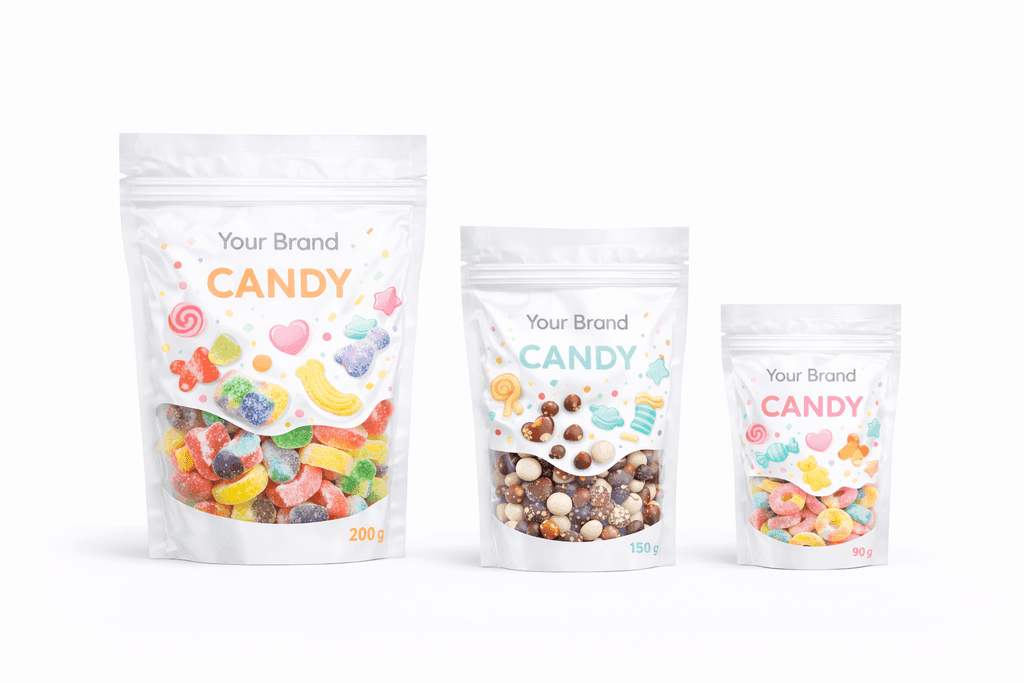
Private label candy typically costs 15–25% more per kg to produce than equivalent branded or unbranded product, due to minimum production runs and packaging costs. However, retailers selling private label candy can charge 10–30% more at retail because the product is exclusive and consumers can't price-compare. The net effect is usually a significant improvement in gross margin — often 15–20 percentage points higher than reselling a commodity candy product. Private label makes economic sense once volume exceeds 500 kg per SKU.
FAQ
Frequently asked questions
A healthy candy retail business typically targets 40–65% gross margin depending on the channel. Pick and mix and specialty candy can achieve 60–80% gross. Convenience store candy typically runs 30–50%. These are gross margins before operating costs (rent, labour, packaging, etc.).
Volume is the primary driver of wholesale candy price. Pallet orders (400–600 kg) are typically priced 20–30% lower than 100 kg orders. Container orders (15+ tonnes) are typically 30–50% lower than pallet pricing. See our wholesale candy pricing page for current volume tiers.
Candy has several attractive characteristics for importers: high margin potential, consistent demand, relatively long shelf life (12–24 months for most formats), and low per-unit value that limits loss exposure. The key challenges are customs compliance, food labelling requirements, and minimum order quantities. At sufficient scale, candy import is a well-established and profitable trade.
Ready to get started?
Contact our team to discuss volumes, pricing, and supply structures for your market.
Related