UK Chocolate Wholesale: Complete Sourcing Guide for Global Buyers
UK is one of Europe's established chocolate sourcing markets, and post-Brexit customs rules make it meaningfully different to source from than the rest of the EU. This guide covers realistic supplier types, pricing tiers, the actual customs and logistics picture, and margin modeling for buyers evaluating UK as a chocolate sourcing region.
 By Rikard Kunsinsh, Candora TradingPublished April 18, 2026
Market Overview & Competitive Landscape
the UK is a mature confectionery market within the wider European chocolate category, where Tesco, Sainsbury's, and Asda anchor the mainstream grocery market, with Aldi and Lidl UK taking a steadily growing share and putting the same discounter pricing pressure seen in continental Europe. For buyers evaluating the UK as a sourcing region, the practical question is less "is there supply" and more "which supplier tier and volume programme fits our buying pattern" — British factories and trading partners typically segment into large export-focused manufacturers running full-container programmes, and smaller regional producers better suited to pilot or private-label volumes.
Regional Supplier Types & Selection
Sourcing from the UK generally means choosing between three supplier types: direct factory relationships (best pricing at volume, but higher MOQ and more due-diligence work), established distributors or trading companies (faster onboarding, smaller MOQ, a margin layer built into pricing), and export-focused co-packers offering private-label programmes. Evaluation should cover certification status (BRCGS, IFS, or ISO 22000 are the standard European food-safety baselines), production capacity relative to your order size, and — critically for a first order — willingness to run a smaller trial batch before a full-volume commitment.
Why Source Chocolate from the UK
Since Brexit, the UK sits outside the EU customs union — every shipment from an EU-based supplier requires a full customs declaration on both sides of the border, and zero-tariff treatment under the EU–UK Trade and Cooperation Agreement depends on the goods meeting rules-of-origin requirements, which for confectionery with imported sugar/cocoa inputs is not automatic and needs to be confirmed supplier by supplier. Beyond logistics, sourcing from the UK gives buyers access to a supplier base operating to broadly EU-equivalent food-safety standards, though outside the EU customs union itself. The trade-off against sourcing from a lower-cost non-European origin is straightforward: higher unit cost, offset by shorter lead times, easier quality-issue resolution, and no long-haul ocean freight risk.
Pricing Structure & Volume Tiers
Chocolate from the UK prices in three broad tiers — commodity/entry-level, standard, and premium — driven mainly by cocoa content and couverture grade rather than country of origin alone; expect a wider spread between tiers than the spread between comparable tiers across different EU countries. Quality tiering runs primarily on cocoa percentage and couverture grade: commodity compound chocolate at the low end, standard couverture in the mid-tier, and single-origin or high-cocoa-percentage couverture at the premium end — the gap between tiers in landed cost is substantial, so specifying the tier clearly in the RFQ avoids mismatched quotes. Volume discounts typically start becoming meaningful at the 5–10 tonne mark, with the steepest step-down between pilot-pallet volumes and a first full-container order. Payment terms from established British suppliers are usually 30% deposit / 70% before shipment for new accounts, moving toward open terms after a track record is established.
Import/Export Logistics & Customs
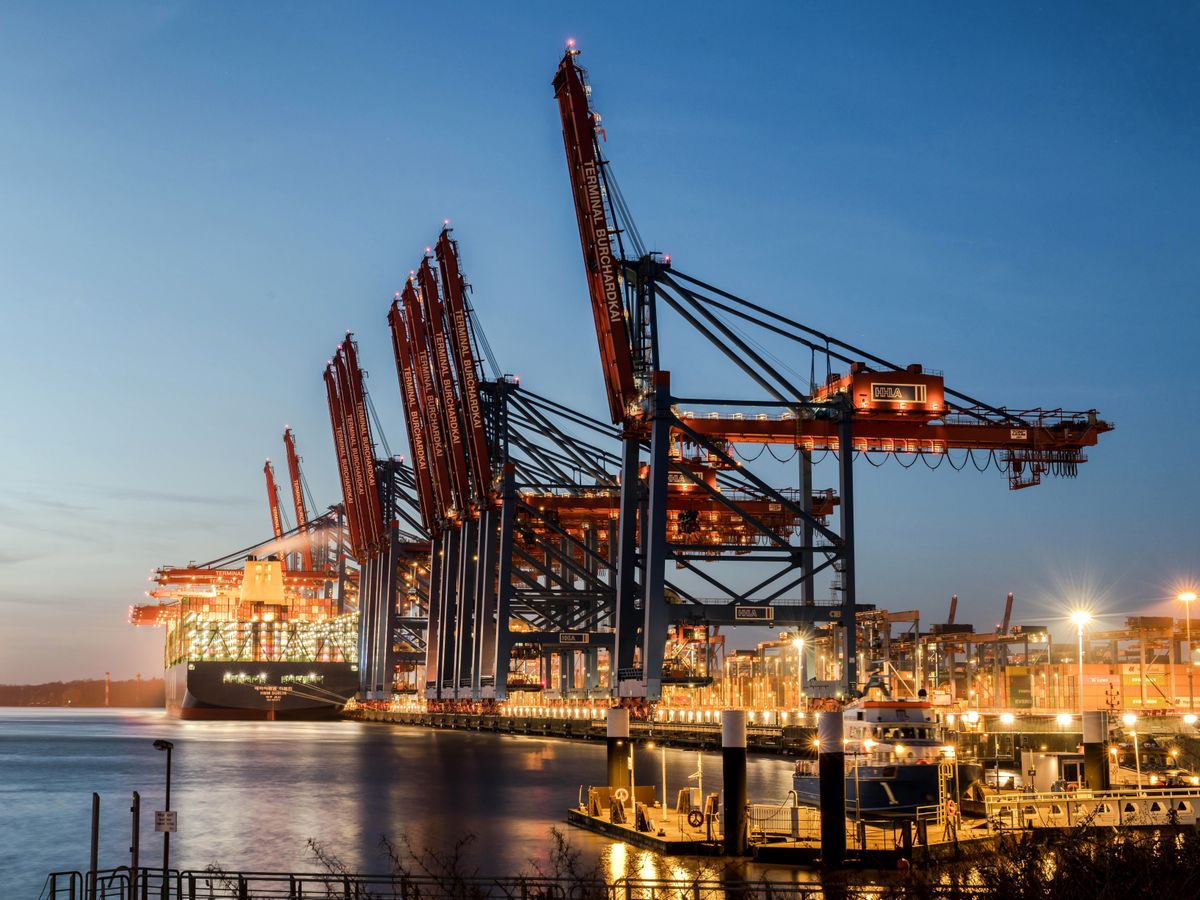
Post-Brexit, the UK requires full customs declarations for every EU shipment and charges standard VAT (20%) at import — this is materially more paperwork than sourcing from any EU member state, and landed-cost calculations should build in customs-broker fees that an intra-EU shipment wouldn't need. Felixstowe and Southampton are the UK's principal container gateways for confectionery imports. Documentation requirements are straightforward for customs clearance (commercial invoice, packing list, and a customs declaration are required for every shipment, plus proof of origin if claiming preferential tariff treatment). Landed-cost calculations should account for freight, insurance, and — for non-EU buyers, customs duty, VAT at import, and broker fees on top of the ex-works price.
Have questions before you keep reading?
Get pricing, MOQs and lead times for your market.
Quality Control & Compliance
Chocolate is temperature-sensitive in transit — summer shipments need temperature-controlled containers or carefully timed departure windows to avoid bloom (the whitish surface discoloration caused by heat cycling), which is a quality defect even when the product remains safe to eat. Standard documentation to request from any British supplier includes a certificate of analysis per batch, allergen statements (the EU's 14 mandatory allergens must be declared regardless of destination market), and shelf-life confirmation — typical shelf life for chocolate runs 12–18 months from production date, which matters for buyers planning seasonal promotional volumes rather than steady-state reordering. First-order quality assurance should include a pre-shipment inspection or third-party sample check rather than relying on the factory's own QC sign-off alone.
Risk Management & Contingencies
The main risk categories sourcing from the UK are supplier concentration (a single-factory dependency with no backup if a production run fails QC or a shipment is delayed), currency exposure (GBP/EUR movement affects landed cost on every order and is worth hedging or at least pricing in for larger commitments), and logistics disruption (port congestion or customs delays pushing back a promotional launch date). The standard mitigations are a qualified second supplier for any product line above a minimum volume threshold, staged payment terms tied to inspection milestones rather than 100% upfront, and building a buffer of 1–2 weeks into lead-time commitments to customers.
Profitability Modeling & ROI
Landed cost for chocolate sourced from the UK is the ex-works or FOB price plus freight, insurance, customs duty, VAT, and broker fees — for EU-to-EU movement this stack is thin relative to intercontinental sourcing, which is the core economic case for European sourcing over lower unit-cost origins further afield. Wholesale margins on European-sourced chocolate typically run 25–40% before overhead, with break-even volume dependent on your fixed logistics costs (a full container amortises freight far better than an LCL or pallet order). Buyers should model at least two volume scenarios — a conservative first-order size and a scaled reorder volume — since per-unit landed cost usually drops meaningfully once a shipment clears the LCL-to-FCL threshold.
FAQ
Frequently asked questions
Varies by quality tier and volume. Premium €6-9/kg, Standard €4-6/kg, Commodity €2.50-4/kg. Volume discounts at 5-10 tonnes+.
Typically 6–10 weeks for a direct factory order, 3–4 weeks through an established distributor holding stock. Add extra time for customs clearance on both sides of the UK border versus an intra-EU shipment.
BRCGS, IFS, or ISO 22000 are the standard European food-safety certifications to expect from an established British manufacturer or co-packer — verify current certification status and scope directly during supplier evaluation rather than relying on a supplier's own claim.
Full customs declarations are required for every shipment. Under the EU–UK Trade and Cooperation Agreement, goods meeting rules-of-origin requirements qualify for zero tariffs — confirm origin status with your supplier, since it isn't automatic. Standard UK import VAT (20%) applies regardless.
MOQ 2-5 tonnes direct, 500kg+ distributors. Negotiate lower MOQ with longer payment terms.
Ready to get started?
Contact our team to discuss volumes, pricing, and supply structures for your market.
Related
Explore more

Wholesale
Austria Chocolate Wholesale: Complete Sourcing Guide for Global Buyers

Wholesale
Belgium Chocolate Wholesale: Complete Sourcing Guide for Global Buyers
Wholesale
Denmark Chocolate Wholesale: Complete Sourcing Guide for Global Buyers

Wholesale
Europe Chocolate Wholesale: Complete Sourcing Guide for Global Buyers
Wholesale
Finland Chocolate Wholesale: Complete Sourcing Guide for Global Buyers

Wholesale
Candy Importer Guide: How to Import Candy from Europe