Pick and Mix Display Setup: Complete ROI & Installation Guide for Retailers
Pick and mix candy installations are one of the highest-ROI retail investments a confectionery retailer can make. The right display generates 65–75% gross margins, turns inventory 8–12 times annually, and creates a destination experience that drives store traffic and basket size. Yet many retailers under-invest in their pick and mix setup, treating it as a secondary confectionery offering rather than a core profit driver. This guide covers display costs, ROI calculation, installation best practices, and profitability optimization.
 By Rikard Kunsinsh, Candora TradingPublished April 17, 2026
Pick and Mix Economics: Why the ROI Is Exceptional
Pick and mix confectionery is economically superior to pre-packaged candy on almost every metric: Gross Margin Comparison:
- Pre-packaged bagged candy: 45–55% gross margin
- Pick and mix loose candy: 65–75% gross margin
- Advantage: 10–20 percentage point margin improvement Per-Square-Meter Performance:
- Pre-packaged candy: €600–€800 revenue per m² annually
- Pick and mix candy: €2,000–€3,500 revenue per m² annually
- Advantage: 3–4x higher sales per space Inventory Turnover:
- Pre-packaged candy: 4–6 turns per year
- Pick and mix candy: 8–12+ turns per year
- Advantage: Lower inventory risk, fresher product, faster capital recovery Customer Behavior:
- Pick and mix increases average transaction value 25–40%
- Pick and mix increases visit frequency (return traffic
- Pick and mix is "Instagram-worthy" (social media boost
- Pick and mix supports premium positioning and pricing Economic Reality: A well-operated 6–8m² pick and mix installation generates €15,000–€25,000 gross profit annually. A pre-packaged candy section of the same size generates €4,000–€6,000 gross profit annually.
The ROI on pick and mix investment is 12–18 months.
Pick and Mix Display Costs: The Complete Investment Breakdown
Pick and mix setup costs vary dramatically based on scale, display type, and customization. Here's the realistic cost breakdown: Display Hardware (one-time investment): Basic Clear Acrylic Bins (small setup, 4–6 SKUs):
- Cost: €800–€2,000 per complete display
- Typical SKU capacity: 50–100kg total
- Best for: Small specialty shops, garden centers, farm shops
- Dimensions: 2–3m² footprint Mid-Range Modular Display (8–12 SKUs, most common):
- Cost: €3,000–€8,000 per complete display
- Typical SKU capacity: 150–250kg total
- Best for: Grocery stores, convenience chains, specialty retail
- Dimensions: 4–6m² footprint
- Includes: Display cases, scoops, signage, lighting Premium/Bespoke Display (15–25+ SKUs, flagship):
- Cost: €8,000–€25,000+ per complete display
- Typical SKU capacity: 400–600kg total
- Best for: Large grocery chains, dedicated candy stores, high-traffic locations
- Dimensions: 8–12m² footprint
- Includes: Custom design, professional lighting, refrigeration (if needed), branded elements Display Type Comparison: | Display Type | Cost | Capacity | Best For | Durability | |---|---|---|---|---| | Clear acrylic bins (DIY) | €800–€2,000 | Small | Startups, niche | 3–5 years | | Modular display (standard | €3,000–€8,000 | Medium | Most retailers | 5–7 years | | Premium bespoke | €8,000–€25,000 | Large | Flagship locations | 7–10 years | | Rental (monthly | €200–€800/month | Varies | Testing, temporary | Flexible | Operational Hardware (consumables, annual):
- Scoops, tongs, bags: €200–€500/year
- Cleaning supplies: €100–€300/year
- Signage (printed): €200–€400/year
- Lighting/bulbs: €100–€200/year
- Total annual consumables: €600–€1,400/year Product Inventory (working capital, not sunk cost):
- Initial stock for medium display (150–250kg): €1,500–€3,500
- This is product cost, not investment—you recoup it through sales
- Turnover is 8–12x annually, so inventory is replaced 8–12 times per year Installation & Setup (labor, one-time):
- Professional installation: €500–€2,000 (if using contractor
- DIY installation: 8–16 hours of internal labor Total One-Time Investment (typical medium setup):
- Display hardware: €3,000–€8,000
- Initial stock: €1,500–€3,500
- Installation/setup: €500–€2,000 (or 0 if DIY)
- Total: €5,000–€13,500 Important note: The product inventory (€1,500–€3,500) is working capital, not sunk cost.
You sell it and replace it. The true investment is the hardware (€3,000–€8,000) + installation (€500–€2,000) = €3,500–€10,000.
ROI Calculation: When Does Pick and Mix Pay for Itself?
ROI depends on sales performance, which depends on location, format, and merchandising. Here's the realistic calculation: Revenue Model (medium display, 6m² footprint): Assume:
- Average transaction: €6–€10 (2–3 items at €3–€4 each
- Transactions per week: 40–80 (depending on store traffic
- Sales per week: €240–€800 (40–80 transactions × €6–€10 avg
- Sales per month: €1,000–€3,500
- Sales per year: €12,000–€42,000 Gross Profit Calculation:
- Gross margin: 65–75%
- Gross profit from pick & mix: €7,800–€31,500 annually Net Profit Calculation (after overhead):
- Labor (restocking, cleaning, customer service): €3,000–€6,000/year
- Supplies (scoops, bags, signage): €600–€1,400/year
- Shrinkage/waste: 3–5% of COGS (€360–€1,575/year
- Net profit: €2,840–€22,525 annually ROI Timeline (assuming €7,000 hardware investment):
- Conservative (€12,000 annual sales, 70% margin, €3,000 overhead): 2.1 years ROI
- Moderate (€24,000 annual sales, 70% margin, €4,000 overhead): 0. 9 years ROI
- Aggressive (€35,000 annual sales, 72% margin, €5,000 overhead): 0.6 years ROI Real-world benchmark (from successful retailers): Well-operated pick and mix displays achieve payback within 8–18 months. Most reach profitability within 12–15 months and deliver €8,000–€20,000 annual net profit in years 2+.
Key drivers of ROI: 1. Location traffic (high-traffic locations perform 3–5x better 2.
Format breadth (12+ SKUs outsell 4–6 SKUs by 40–60%) 3. Merchandising quality (attractive displays sell 30–50% more 4.
Staff engagement (trained staff recommend, suggest, upsell 5.
Installation & Space Planning: Getting Pick and Mix Right
Pick and mix installation requires more planning than standard planogram-based shelving. Space, traffic flow, and visual hierarchy matter.
Space Requirements:
- Small setup (4–6 SKUs): 2–3m² footprint, €5,000–€8,000 annual profit potential
- Medium setup (8–12 SKUs, most common): 4–6m² footprint, €8,000–€18,000 annual profit potential
- Large setup (15–25 SKUs): 8–12m² footprint, €18,000–€30,000 annual profit potential For reference:
- 3m² is roughly the size of a standard refrigerator unit
- 6m² is roughly a wall bay (8ft wide × 3ft deep
- 10m² is a dedicated "pick and mix corner" (10ft × 10ft) Location Strategy: High-traffic "anchor" locations (best):
- Till point/checkout area
- Main entrance/exit
- Intersection of major customer flows
- Expected performance: 60–80 transactions/week, €2,500–€4,000/month sales Secondary locations (good):
- Confectionery aisle
- Impulse zone
- End-of-aisle display
- Expected performance: 30–50 transactions/week, €1,500–€2,500/month sales Poor locations (avoid):
- Back corner
- Restricted traffic area
- Shared space with unrelated category
- Expected performance: 10–20 transactions/week, €400–€800/month sales Pro tip: Test pick and mix in a temporary location first (rented display for €200–€400/month for 3 months). Measure performance.
Then decide on permanent placement. Visual Merchandising Best Practices: 1.
Color contrast: Use clear acrylic/glass so candy colors are visible and attractive 2. Height variation: Vary bin heights so displays aren't monotonously level 3.
Lighting: Bright, warm lighting makes candy appealing (overhead LED lights or built-in display lighting 4. Signage: Clear price signs (€/100g), product names, ingredient info 5.
Scoop placement: Scoops visible and accessible; never hide them 6. Traffic flow: Place display to face incoming traffic (not blocked by fixtures 7.
Restocking: Keep bins full and attractive (empty bins signal low sales/quality 8.
Product Assortment Strategy: What to Stock
Pick and mix success is 70% assortment strategy, 30% execution. Stock the wrong formats and no merchandising will fix it.
Core Format Breakdown (for medium 8–12 SKU display): Sour Formats (25–30%of SKU allocation):
- Sour belts (highest velocity
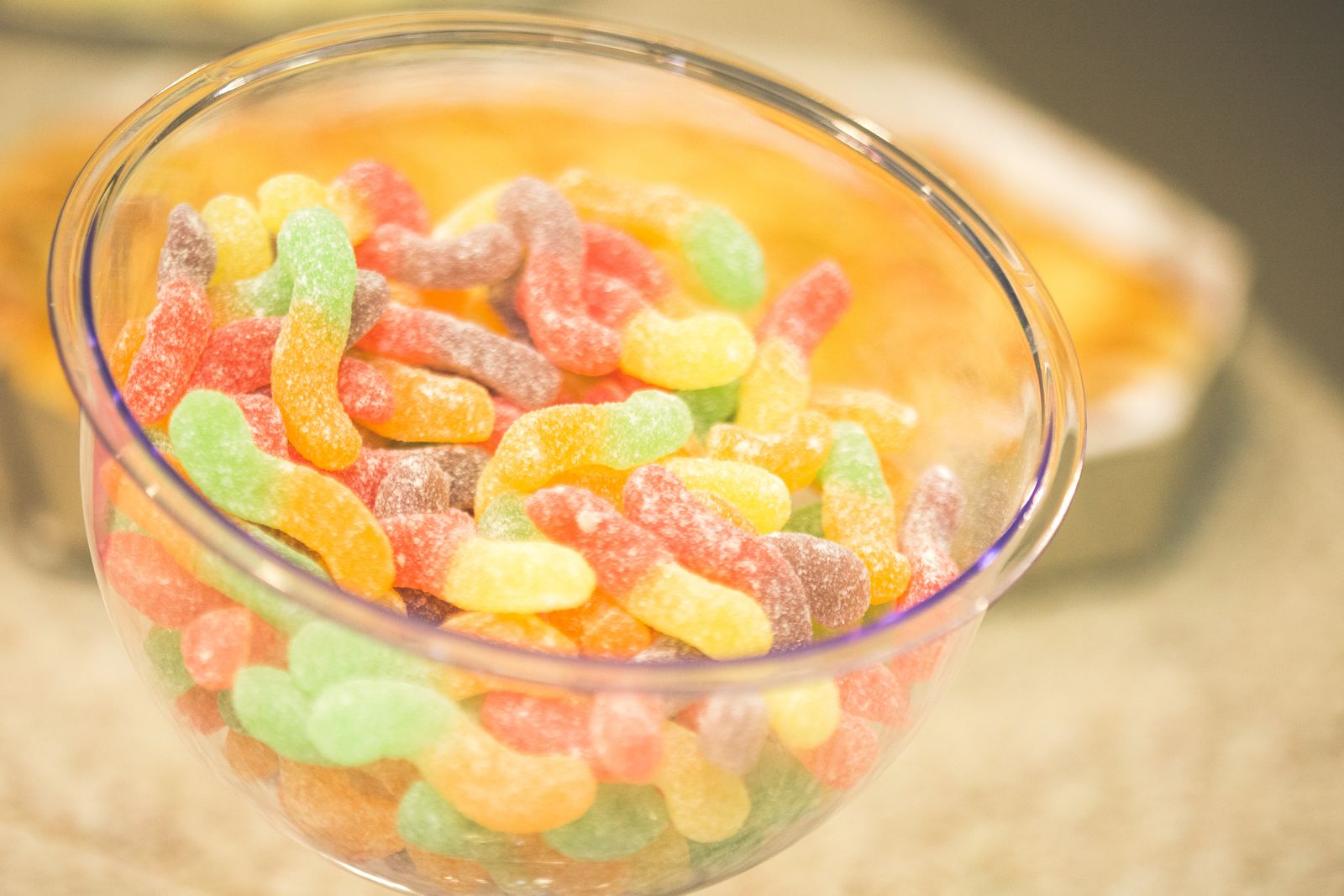
- Sour worms
- Sour watermelon slices
- Sour cola bottles
- Allocation: 3–4 SKUs
- Why: Highest impulse category, premium pricing, appeals to all ages Jelly Formats (25–30%of SKU allocation):
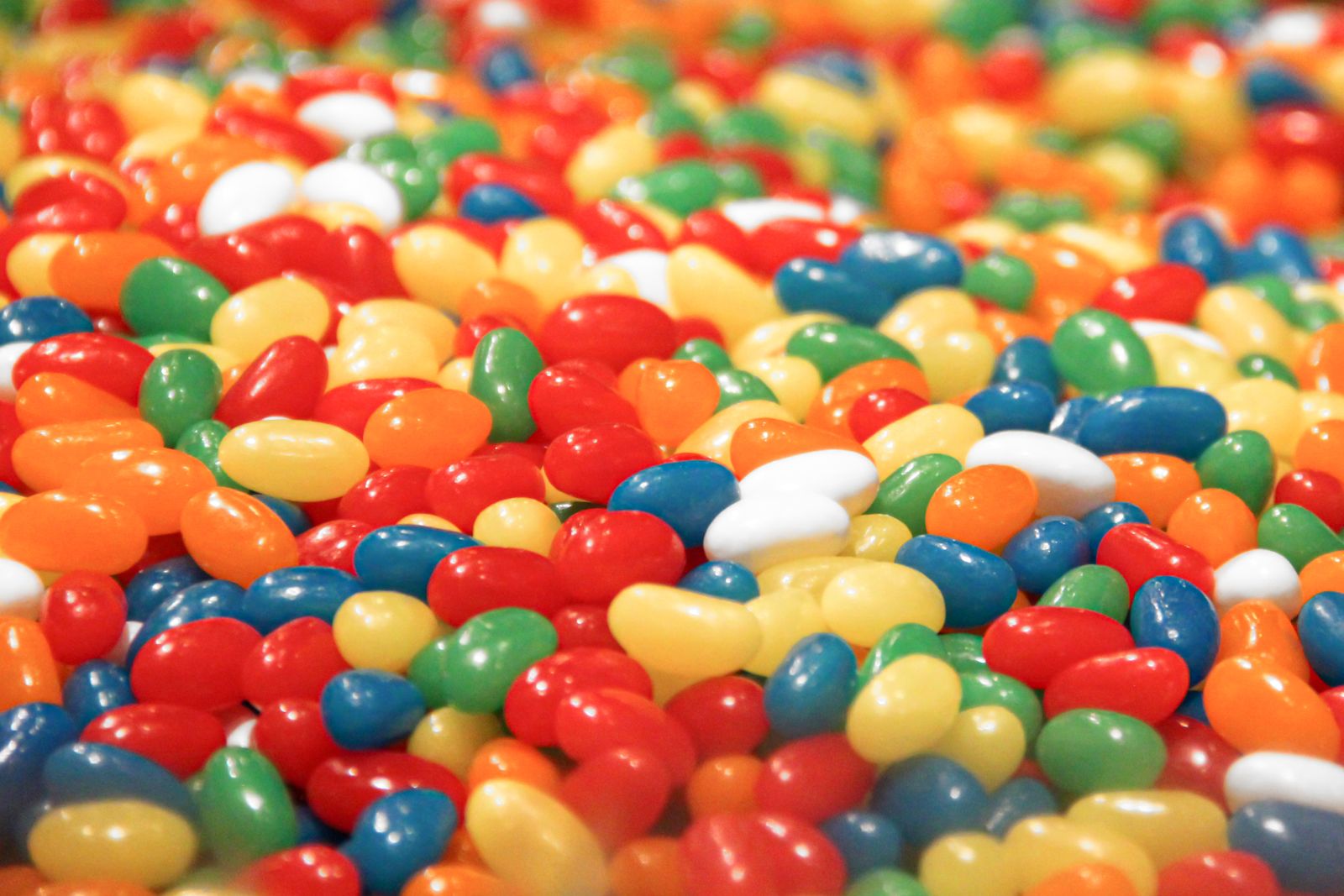
- Jelly bears (classic
- Foam strawberries/bananas
- Cola bottles (retro
- Jelly rings/shapes
- Allocation: 3–4 SKUs
- Why: Universal appeal, broad color range, visual variety Chocolate & Premium Formats (15–20%of SKU allocation):
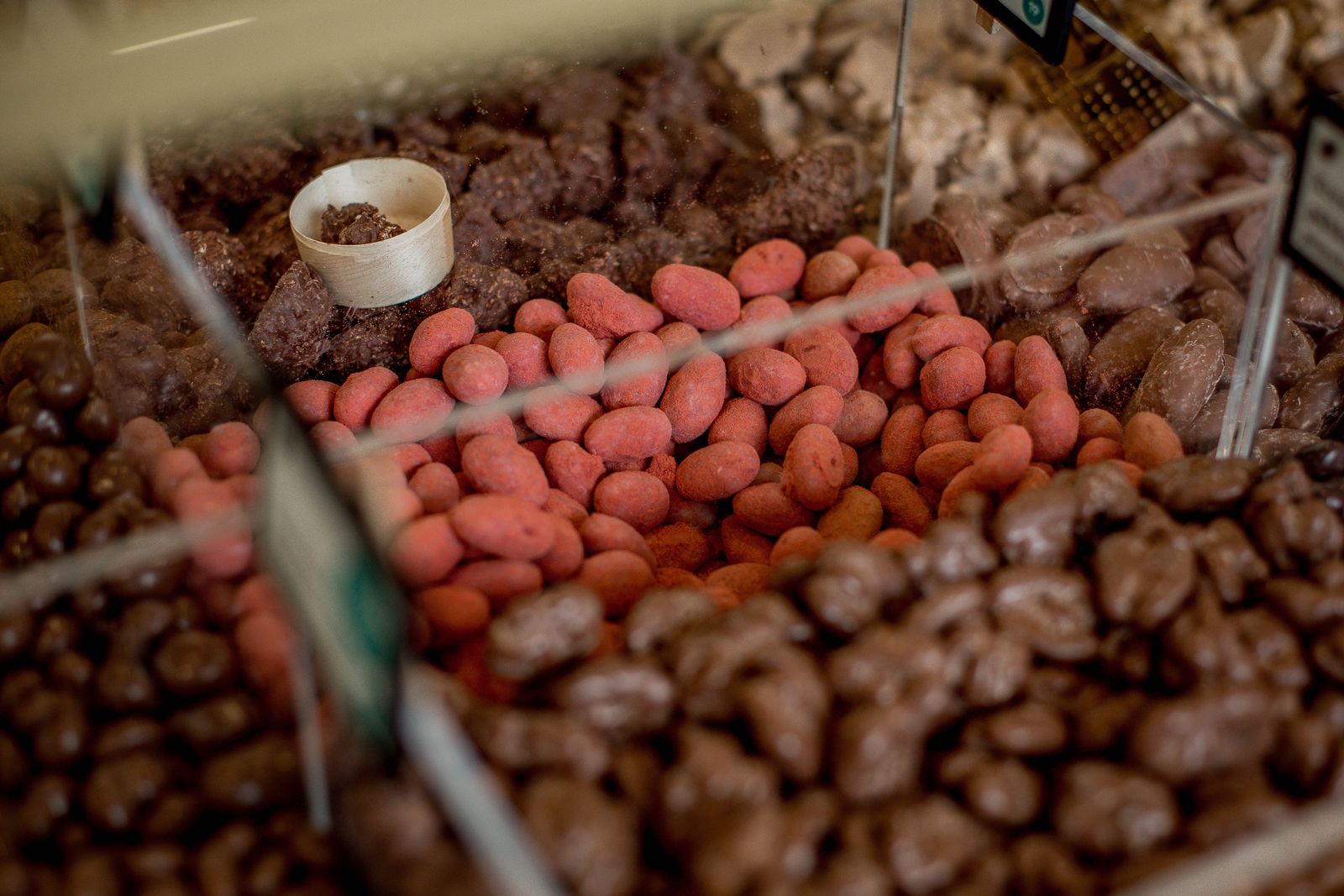
- Chocolate-covered formats (if no temperature issue
- Premium/niche formats
- Specialty items (sugar-free, vegan
- Allocation: 2–3 SKUs
- Why: Higher margin, premium positioning Mixed/Assortment Formats (15–20%of SKU allocation):
- Pre-mixed bulk bags (for convenience
- Seasonal collections
- "Mystery mix" assortments
- Allocation: 2–3 SKUs
- Why: Drive transaction value, convenience for time-pressed customers Key principles: 1. 40% sour, 40% jelly, 20% chocolate/premiumis the proven mix 2.Add seasonal variants(Halloween, Christmas, Easter in-season 3.Rotate slow-movers(every 4–6 weeks, replace with faster formats 4.Stock depth matters:Better to have 8 SKUs deeply stocked than 16 SKUs sparsely stocked 5.Pricing consistency:** Price most SKUs at €3.50–€4.
Have questions before you keep reading?
Get pricing, MOQs and lead times for your market.
Pricing Strategy: Maximizing Pick and Mix Margins
Pick and mix pricing is counterintuitive. Higher prices often drive higher sales and profit.
Pricing Model (by format and quality tier): Standard formats (sour belts, jelly bears, common formats):
- Cost: €2.00–€2.50/kg
- Typical retail price: €3.50–€4.50 per 100g (€35–€45/kg
- Margin: 86–92% gross (before overhead Premium formats (foam shapes, specialty, imported):
- Cost: €3.00–€4.00/kg
- Typical retail price: €4.50–€5.50 per 100g (€45–€55/kg
- Margin: 85–90% gross (before overhead Chocolate/premium positioning:
- Cost: €4.00–€6.00/kg
- Typical retail price: €5.50–€7.50 per 100g (€55–€75/kg
- Margin: 85–91% gross (before overhead Pricing psychology:
- €3.50–€4.50 per 100g feels "premium casual" (not budget, not luxury
- €2.50–€3.50 per 100g feels "budget" (commoditized, lower quality perception
- €5.50+ per 100g feels "luxury" (only for specialty formats Recommended pricing strategy:
- Price 70% of SKUs at €4.00 per 100g (standard, consistent, easy math)
- Price 20% of SKUs at €4.50 per 100g (premium formats
- Price 10% of SKUs at €3.50 per 100g (value/entry format Why higher prices work: 1. Customers perceive higher price = higher quality 2.
Psychological pricing (€4.00 is the "sweet spot"—easy to calculate, feels reasonable 3.
Margin per transaction is the same or higher (€6–€10 transaction avg regardless of per-gram price 4. Inventory turns faster (competitive pricing increases velocity Margin impact of pricing strategy: Assuming €200/week per-location sales:
- At €3.50 per 100g: €14.00/week × 70% margin = €9.80 weekly gross profit
- At €4.00 per 100g: €13.00/week × 80% margin = €10.40 weekly gross profit
- At €4.50 per 100g: €12.00/week × 85% margin = €10.20 weekly gross profit Result: €4.
Staffing, Training & Ongoing Operations
Pick and mix requires more active management than static shelving. Staff training and engagement drive profitability.
Staffing Requirements:
- Small setup (2–3m²): 3–4 hours/week restocking + customer service
- Medium setup (4–6m²): 6–8 hours/week restocking + customer service
- Large setup (8–12m²): 12–15 hours/week restocking + customer service Key Staff Responsibilities: 1. Restocking & Stock Management
- Daily visual check (are bins visually attractive and full?
)
- 2–3x weekly deep restock (refill bins, rotate stock
- Weekly inventory tracking (what's selling? what's slow?
)
- Shrink monitoring (identify theft/damage issues 2. Visual Merchandising
- Keep bins clean and dust-free (daily
- Replace damaged/faded signage
- Rotate slow-moving SKUs (every 4–6 weeks
- Maintain visual appeal (color contrast, height variation 3.
Customer Engagement
- Greet customers at display
- Suggest products ("Try the sour belts—they're bestsellers")
- Answer questions (ingredients, allergens, recommendations
- Upsell ("These are great together if you mix them") 4. Inventory Control
- Weekly reorder decisions (which SKUs to restock, which to swap
- Tracking expiry dates (first-in-first-out rotation
- Loss prevention (monitor for shoplifting/waste Staff Training Program:
- Onboarding: 1–2 hour training on restocking, customer service, upselling
- Monthly updates: What's selling?
What should we change?
Pick and Mix Profitability in Different Retail Formats
Pick and mix profitability varies significantly by retail context: Grocery & Supermarket:
- Typical location: Till point or end-of-aisle
- Annual sales per 6m² display: €20,000–€35,000
- Margin: 65–70% gross
- Net profit: €6,000–€12,000 annually
- ROI: 9–15 months
- Key success factor: Prime location (till point = 2–3x better than aisle Convenience & Quick Commerce:
- Typical location: Till point, impulse zone
- Annual sales per 4m² display: €15,000–€25,000
- Margin: 65–70% gross
- Net profit: €4,000–€8,000 annually
- ROI: 14–20 months
- Key success factor: Restocking frequency (3–4x weekly ideas Specialty Confectionery Retail:
- Typical location: Central focal point
- Annual sales per 6m² display: €30,000–€45,000
- Margin: 70–75% gross
- Net profit: €12,000–€20,000 annually
- ROI: 6–10 months
- Key success factor: Premium SKU selection, visual merchandising Garden Centers & Farm Shops:
- Typical location: Checkout area
- Annual sales per 3m² display: €12,000–€18,000
- Margin: 65–70% gross
- Net profit: €3,000–€6,000 annually
- ROI: 14–18 months
- Key success factor: Seasonal rotating (summer, spring, Christmas Hotel/Hospitality:
- Typical location: Lobby, gift shop, minibar supplement
- Annual sales per 2m² display: €15,000–€25,000
- Margin: 70–75% gross (premium positioning
- Net profit: €6,000–€12,000 annually
- ROI: 10–15 months
- Key success factor: Premium/gift positioning, custom branding
Pick and Mix Implementation Checklist
Before launching pick and mix, confirm: Planning:
- ☐ Location selected and traffic analysis completed
- ☐ Space allocated (2–12m² depending on scale
- ☐ Initial sales forecast prepared (monthly revenue target
- ☐ Staffing plan documented (hours/week needed Hardware & Setup:
- ☐ Display type selected (acrylic bins, modular, premium
- ☐ Display cost quoted and approved
- ☐ Installation timeline confirmed
- ☐ Operational supplies ordered (scoops, bags, signage, cleaning supplier Product & Assortment:
- ☐ 8–12 core SKUs identified and tested
- ☐ Supplier partnerships confirmed (bulk format supply, restock schedule
- ☐ Initial inventory ordered (150–250kg for medium display
- ☐ Pricing strategy set (recommend €3.50–€4.50 per 100g) Operations:
- ☐ Staff trained on restocking, merchandising, customer service
- ☐ Restock schedule created (daily check, weekly deep restock
- ☐ Inventory tracking system set up (weekly sales, SKU performance
- ☐ Loss prevention plan documented (monitoring, staff accountability Launch & Measurement:
- ☐ Soft opening (2–4 weeks testing before major promotion
- ☐ Weekly sales tracked against forecast
- ☐ SKU performance monitored (which formats selling? which slow?
)
- ☐ Staffing effectiveness reviewed (is restocking adequate? )
- ☐ ROI calculation updated monthly (on track for 12–18 month payback?
FAQ
Frequently asked questions
Basic setup (4–6 SKUs): €800–€2,000. Typical medium setup (8–12 SKUs): €3,000–€8,000. Premium setup (15–25 SKUs): €8,000–€25,000. Plus initial product inventory (€1,500–€3,500) and installation labor.
Payback is typically 8–18 months (depending on location and execution). Well-operated displays generate €8,000–€20,000+ net profit annually in years 2+. ROI is 12–18 months on average.
65–75% gross margin (vs 45–55% for bagged confectionery). After staffing and overhead costs (€3,000–€5,000 annually), net margins are 30–50% of sales revenue.
40% sour formats (sour belts, worms), 40% jelly (bears, foam, shapes), 20% chocolate/premium. Stock 8–12 core SKUs. Deeper inventory in fewer SKUs outsells sparse inventory in many SKUs.
€4.00 per 100g is optimal (sweet spot for margin + customer perception). Price 70% of SKUs at this level, 20% at €4.50 (premium), 10% at €3.50 (entry).
Daily visual check (5 minutes). Weekly deep restock (30 minutes). 2–3x per week restock is ideal for high-traffic locations. Slow-moving SKUs rotated every 4–6 weeks.
Ready to get started?
Contact our team to discuss volumes, pricing, and supply structures for your market.
Related