Gummy Candy Sourcing: Category Strategy & Economics
Gummy candy is the fastest-growing confectionery segment globally (5–8% CAGR), encompassing traditional gummies, functional gummies (energy, sleep, vitamins), and novelty formats. Gummies command 50–70% retail margins and high customer loyalty. For category managers, understanding gummy market segments, sourcing economics, and assortment strategy is critical. This guide covers the gummy category landscape.
 By Rikard Kunsinsh, Candora TradingPublished April 18, 2026
Gummy Market Segments: Traditional vs Functional vs Novelty
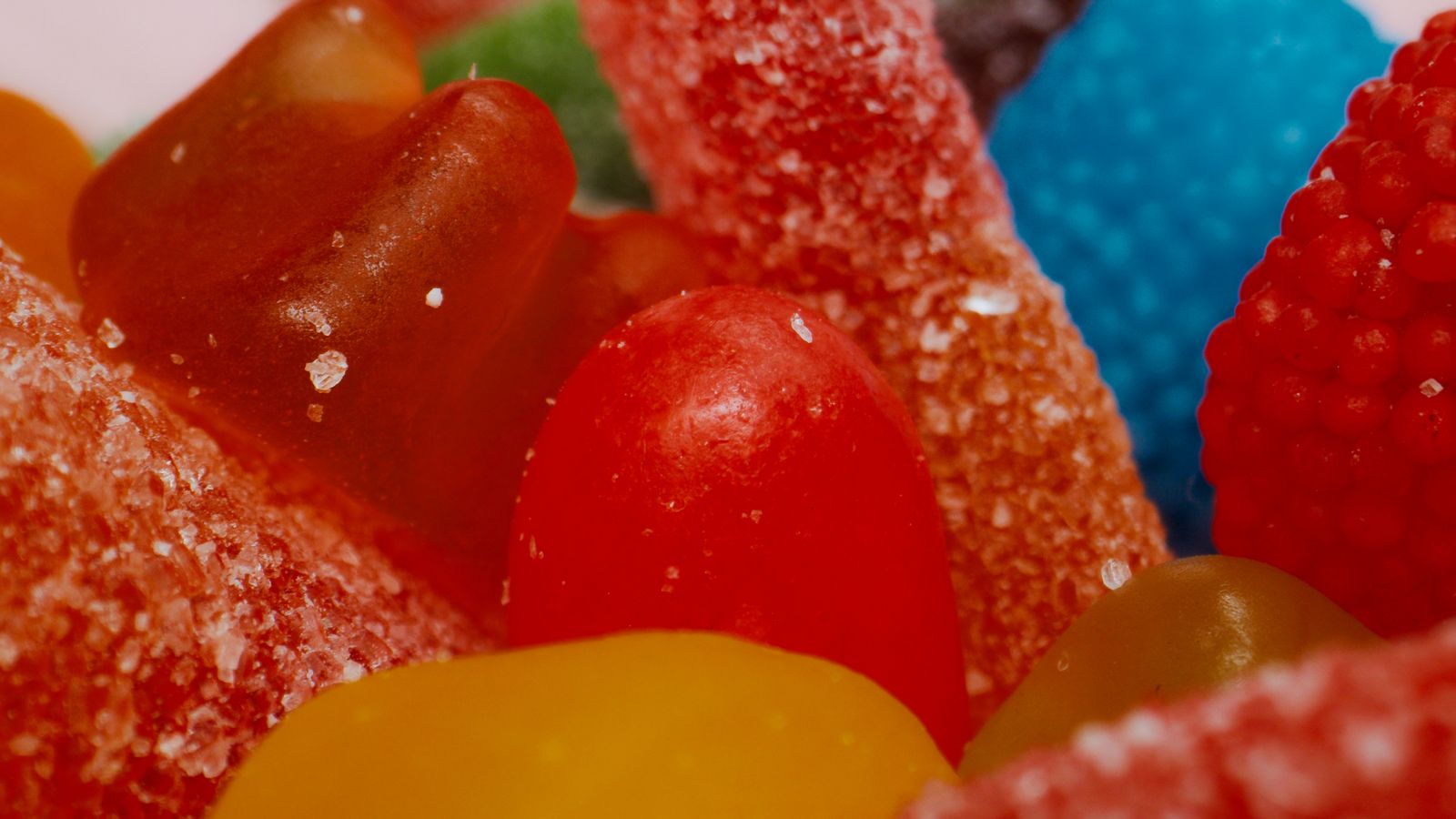
Traditional gummies (50%category): Jelly bears, gummy worms, fruit shapes. Cost €1.50–2.50/kg, margin 50–60%.
Functional gummies (30%category, fastest-growing): Energy, sleep, vitamins, collagen. Cost €2.50–4.50/kg, margin 60–75%.
Novelty gummies (20%category): Sour coated, premium shapes, trending formats. Cost €2.00–4.00/kg, margin 65–70%.
Strategy: Carry all three segments to capture different customer motivations.
Sourcing: Flavour, Gelatin Source, Certification
Key sourcing considerations: Gelatin source (pork, beef, fish, pectin), organic certification, allergen management, private label capability. Supplier capability: Can they produce multiple formats?
Speed to trend (6–8 weeks for new format)? Quality consistency?
Certifications (BRCGS, allergen management)? Strategy: Work with supplier capable of all three segments + custom capability.

MOQ & Order Economics
Gummy production runs on mogul-and-starch or modern depositor equipment, and switching a line between gelatin and pectin formulations — or between allergen profiles for functional gummies with active ingredients — requires validated cleaning and changeover, which suppliers factor into minimum order sizes. Pectin lines in particular are newer and less widely built out than legacy gelatin capacity, so per-unit costs and MOQs on pectin-based SKUs tend to run higher until a supplier reaches scale on that formulation.
Buyers building a multi-segment assortment (traditional, functional, novelty) should expect different MOQ economics for each: traditional gelatin gummies benefit from the most mature, highest-capacity manufacturing base and the most negotiable minimums, while functional gummies with vitamins or actives carry higher per-batch costs tied to ingredient sourcing and dosing-accuracy testing, which suppliers won't discount as readily at low volume.
Lead Times & Logistics Strategy
Gummies sit in a more demanding logistics position than hard candy: shelf life is shorter (roughly 9–12 months versus 12–24 for hard candy), and the format is genuinely humidity- and temperature-sensitive — high heat and humidity can cause gummies to melt, sweat, or stick together, while overly dry conditions can pull moisture out and make them hard. That makes summer shipping and warehousing meaningfully riskier for gummies than for hard candy, and temperature-controlled logistics or at minimum insulated/ventilated containers with desiccant packaging deserve real budget rather than being treated as optional.
Given the category's fast growth, manufacturing capacity is also tighter than in mature formats, so lead times can extend during peak demand periods (notably before major retail seasons) even when a supplier's baseline lead time looks stable on paper — buyers should build in schedule buffer accordingly rather than assuming quoted lead times hold under demand pressure.
Have questions before you keep reading?
Get pricing, MOQs and lead times for your market.
Supplier Relationship & Risk Management
Gummy candy is currently the fastest-growing confectionery format across most Western markets, and that growth creates a specific relationship risk: manufacturing capacity is in high demand, and established suppliers can end up prioritizing their largest or longest-standing accounts when order books fill up. Smaller or newer buyers should secure priority or capacity commitments in writing rather than assuming a quoted lead time will hold once a supplier's order book tightens.
Qualification should go beyond standard capacity and payment-term checks to specifically probe formulation flexibility — can the supplier run gelatin and pectin lines without cross-contamination, and do they have texture-consistency controls in place, since chewiness variation is one of the most common quality complaints in this category. Dual-sourcing across a gelatin-focused and a pectin-capable supplier is a reasonable way to hedge both capacity risk and formulation risk simultaneously.
Pricing Negotiation & Margin Protection
Pricing in gummies varies meaningfully by segment rather than following one commodity curve: traditional gelatin gummies sit at the lower end of the cost range, functional gummies (vitamins, collagen, other actives) command the highest cost and margin due to active-ingredient sourcing, and novelty/trending formats sit in between. Margin protection strategy should follow that segmentation — traditional gummies compete more on price and volume tiers, while functional and novelty gummies justify premium pricing through ingredient and formulation differentiation rather than volume alone.
Because texture consistency (chewiness) is the single most common driver of consumer complaints and returns in this category, margin protection isn't only a pricing exercise — it means negotiating explicit texture and consistency specifications into supplier contracts, not just price and volume terms, so that a cheaper-but-inconsistent batch doesn't erode margin through returns and reputational damage.

Compliance & Quality Assurance
Compliance in gummies centers on accurate gelatin sourcing documentation: whether gelatin is bovine, porcine, or fish-derived directly determines allergen labeling accuracy and eligibility for halal or kosher claims, and buyers making any dietary claim need verified sourcing paperwork, not just a supplier's assurance. Pectin-based SKUs marketed as vegetarian need confirmation that they're produced on lines free of cross-contact with gelatin-based product, not simply that the recipe itself is gelatin-free.
Texture and chewiness consistency — the defining quality attribute of this format — should be verified with real instrumental testing (texture analyzer measurements of hardness, gumminess, and chewiness) rather than subjective spot checks, since this is the attribute most likely to trigger consumer complaints when it drifts batch to batch. Moisture content control is equally important across the shelf-life window to prevent gummies from hardening or turning overly soft in storage, alongside standard batch traceability and allergen documentation.
FAQ
Frequently asked questions
5–8% CAGR (fastest-growing candy category). Functional gummies 12–15% CAGR. Novelty 10–12% CAGR.
Traditional: €1.50–2.50/kg. Functional: €2.50–4.50/kg. Novelty: €2.00–4.00/kg. Functional commands premium due to ingredients.
Direct factory: 6-10 weeks. Distributor: 2-4 weeks. Negotiate based on volume and commitment.
5-20 tonnes (baseline), 20-50 tonnes (5-8% discount), 50-100 tonnes (10-15%), 100+ (20-25%).
Lock FOB pricing after 2 successful orders. Volume commitments (50+ tonnes/year) unlock 10-15% discounts. Payment terms: typically 50% deposit, 50% on delivery.
Ready to get started?
Contact our team to discuss volumes, pricing, and supply structures for your market.
Related
Explore more

Jelly Candy
Gummy Candy Wholesale

Confectionery
Functional Gummy Wholesale: Vitamin and Supplement Gummies for Retail

Specialty
Energy Gummy Wholesale: The Fastest-Growing Confectionery Segment for 2026+
Jelly Candy
Bulk Gummies Supplier

Wholesale
France Gummy Wholesale: Complete Sourcing Guide for Global Buyers