Chocolate Wholesale Sourcing: Complete Buyer's Guide
Chocolate is the largest confectionery category globally (€20B+ market), but sourcing strategy varies dramatically by market and buyer type. Premium chocolate commands 50–70% retail margins; commodity chocolate operates at 30–40%. For retail buyers, understanding chocolate sourcing—branded vs private label, direct factory vs distributor, premium vs value positioning—is critical to category profitability. This guide covers chocolate sourcing strategy, pricing models, and supplier selection.
 By Rikard Kunsinsh, Candora TradingPublished April 18, 2026
Chocolate Market: Size, Segments & Margins
Global chocolate market: €20B+, growing 4–6% annually. Segments: premium brands (40% value, 15–20% volume), standard chocolate (35% value, 50% volume), budget/commodity (25% value, 30–35% volume).
Retail margins vary: premium 50–70% gross, standard 40–50%, budget 30–40%. For buyers, premium positioning justifies higher wholesale costs but lower volume.
Budget positioning requires volume scale.
Sourcing Options: Branded vs Private Label vs Direct Factory
Branded chocolate: Premium brands (Lindt, Ferrero, Ghirardelli command retail premium but lower wholesale margins (35–45%). Private label: Higher wholesale margin (50–65%) but requires MOQ 500kg+, lead time 8–10 weeks.
Direct factory: Lowest cost (20–35% savings vs distributor but MOQ 1000kg+, 6–8 week lead time. Strategy depends on positioning: premium brands justify cost, private label maximizes margin, direct factory maximizes volume profit.
MOQ & Order Economics
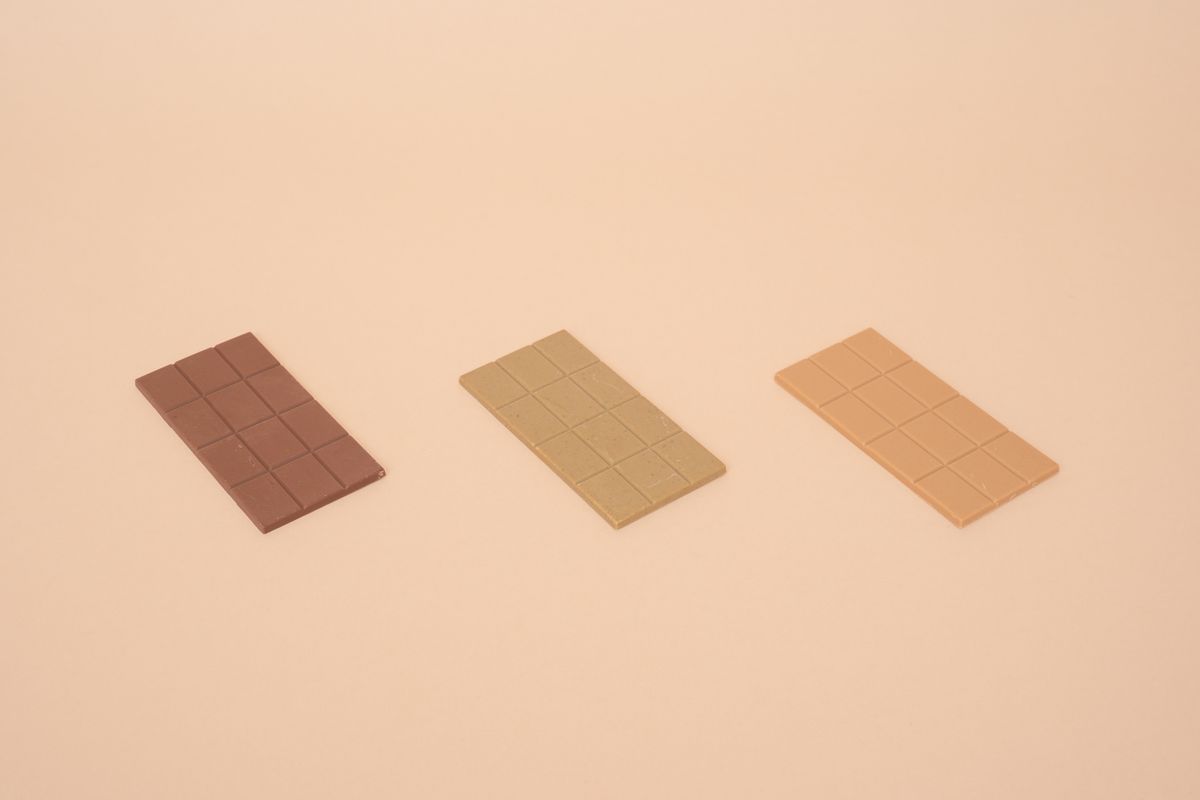
MOQ in chocolate varies more by format than by supplier tier. Molded bars and tablets carry the lowest tooling barrier since molds are often shared across SKUs; filled pralines, shells, and shaped novelties require dedicated molds or depositor changeovers, pushing MOQs and setup costs higher. Bulk couverture (callets, blocks) sold to food manufacturers or in-house chocolatiers typically has the lowest per-kg MOQ since it skips retail packaging entirely.
Private label buyers should budget separately for mold tooling (often a one-time cost recouped over several production runs) versus recurring ingredient MOQ. Combining bar, praline, and bulk formats under one supplier can average down blended order minimums, but each format's MOQ should be negotiated individually rather than assumed to scale together.
Lead Times & Logistics Strategy
Chocolate's core logistics constraint is thermal stability, not just transit time. Chocolate begins softening near 30–32°C and untempered or heat-stressed product develops fat bloom (a dull grey-white surface film from cocoa butter recrystallizing) or, if exposed to moisture, sugar bloom—both are cosmetic but damage sellability and buyer trust. This makes shipping season as important as shipping speed: summer ocean freight without temperature control carries real bloom risk, while October–April shipping is generally safer without added cold-chain cost.
Filled and fresh-cream pralines have materially shorter shelf life than solid bars or couverture blocks, so lead-time planning should be format-specific rather than applied uniformly across a chocolate SKU range. Buyers moving temperature-sensitive formats through warm transit windows should budget for insulated packaging or reefer container premiums.
Have questions before you keep reading?
Get pricing, MOQs and lead times for your market.
Supplier Relationship & Risk Management
Cocoa is a globally traded soft commodity, and its price has been unusually volatile in recent years—West African crop shortfalls drove world cocoa prices to multi-decade highs, squeezing margins across the entire chain from grower to retailer. Buyers on fixed-price contracts with chocolate suppliers should understand whether that pricing is hedged or floats with the underlying commodity market, since an unhedged supplier under cocoa-price stress is a real continuity risk.
Diversifying across suppliers sourcing from different cocoa origins (West Africa vs. South America/Southeast Asia) reduces exposure to a single region's harvest failure. Standard due diligence still applies: production capacity checks, consistent lead times, and documented quality control, with on-site or third-party audits justified once annual volume is significant.
Pricing Negotiation & Margin Protection
Because cocoa is the dominant raw-material cost in chocolate, sustainable pricing agreements should reference the underlying commodity market rather than lock a flat rate indefinitely—cocoa futures (traded on ICE in both London and New York) have moved dramatically in recent years, and a supplier holding a stale fixed price is either absorbing losses (unsustainable) or was never quoting real input costs. Ask suppliers whether their pricing includes a cocoa-indexed pass-through clause and over what threshold it triggers.
Beyond the commodity component, negotiate separately on conversion cost (labor, tempering, packaging) which is comparatively stable and more negotiable on volume. Buyers should distinguish "the chocolate got more expensive because cocoa did" from margin creep in the manufacturer's own conversion fee, and revisit contracts more frequently during periods of commodity volatility rather than defaulting to annual reviews.

Compliance & Quality Assurance
Baseline food safety certification (ISO 22000, FSSC 22000, HACCP-based systems) applies to chocolate as to any confectionery, but chocolate carries specific allergen cross-contact risk—milk, soy lecithin, tree nuts, and gluten-containing inclusions are common on shared production lines, and buyers should request line-level allergen mapping, not just a facility-level certificate.
Cocoa sustainability claims (Rainforest Alliance, Fairtrade) come with different chain-of-custody models—mass balance, segregated, or identity preserved—and buyers marketing "certified" chocolate should confirm which model applies, since mass-balance certification doesn't guarantee the cocoa in a specific bar is certified-origin. Require batch-level traceability back to the conversion facility, and treat any obvious taste or texture inconsistency between production runs as a signal worth investigating before it reaches shelf, since inconsistent tempering is one of the most common and most detectable quality failures in chocolate manufacturing.
FAQ
Frequently asked questions
Premium brands: €2.50–6.00/unit. Private label: €1.50–3.00/unit. Commodity: €0.80–1.50/unit. Depends on format, brand, volume, origin.
Premium: 50–70% retail gross. Standard: 40–50%. Budget: 30–40%. Margins decrease with volume-focused positioning.
Direct factory: 6-10 weeks. Distributor: 2-4 weeks. Negotiate based on volume and commitment.
5-20 tonnes (baseline), 20-50 tonnes (5-8% discount), 50-100 tonnes (10-15%), 100+ (20-25%).
Lock FOB pricing after 2 successful orders. Volume commitments (50+ tonnes/year) unlock 10-15% discounts. Payment terms: typically 50% deposit, 50% on delivery.
Smaller pilot orders start from palletised quantities (100kg+); standard bulk chocolate programmes run 5+ tonnes, with volume discounts stepping up from there. Chocolate-coated formats are shipped with temperature protection during warmer months.
Ready to get started?
Contact our team to discuss volumes, pricing, and supply structures for your market.
Related